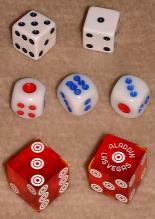
- There’s a difference between the true odds of your winning any particular bet and the odds the casino actually uses to pay you if you do win. That difference is always in the casino’s favor and it’s the reason casino owners (always a government agency in Canada) are rich and you’re not.
- Because of the house edge, the casino will always win in the long run, no matter how smart you are, how good you think your system is, or how lucky you are. The Las Vegas strip is paved with the losses of innocent fun-seekers who don’t know that.
- Some of the games have a much smaller house advantage than others, so your chances of walking away a winner after playing them are higher. This assumes, however, that you play the best strategy and that you’re able to walk away while ahead.
- If gamblers only played blackjack, mini-baccarat, pai-gow poker, live poker, the sports book, and bingo, they’d lose a lot less money. Those are games with a house edge of less than 3 percent.
- The casino loves to see you playing games like Caribbean Stud Poker, Let It Ride, Red Dog, single-deck 21, and those undignified spectacles like the Big Wheel or Wheel of Fortune. The house edge on these is astronomical.
- Playing keno is the equivalent of making a charity donation to the casino ownership. Yes, the young keno ladies are friendly and they need the tips. And yes, it’s simple and kind of fun to try to divine some numbers while you’re at the coffee shop or buffet or bar. Just be aware that the house advantage in keno can run as high as 50 percent. You’re better off playing the state or provincial lottery — it’s essentially the same game, but at least you’re donating your money to the public good instead of business magnates.
Monday, August 31, 2015
6 Things Casinos Don’t Want You to Know About Your Odds
Think you can beat the odds? Think again. Here are a few insider secrets to keep up your sleeve the next time you're ready to try your luck.
Don't Waste Your Money: Best and worst casino game odds
Toledo News Now) -
It has been almost a year since the opening of Toledo's Hollywood Casino, and Ohio is still buzzing over casino games with additional new casinos in Cleveland and Columbus. Before you go, you may want to know which games give you the best chance of winning.
Many of us are now planning our summer vacations. Whether you are heading to Las Vegas, taking a cruise, or simply staying home, there's a good chance you may visit a casino during your time off from work. We went behind the scenes to find out which games give you an edge.
Table Games Your Best Bet
Jay Bean, floor manager at Cincinnati's Horseshoe Casino, agreed to sit down with us and talk about games with the best odds.
He says many people don't realize that table games have much better odds than slots. They are intimidated by thoughts of card sharks taking their money, with images of an intense Texas Hold 'Em tournament in their minds, so they stick with safe games. But they are doing themselves a disservice, Bean says.
Bean's advice? After you've spent some time on the slot machines, move on to the blackjack table, and start by just observing.
1. Blackjack
Blackjack has the best odds of winning, with a house edge of just 1 percent in most casinos, Bean says. Plus, you are playing against only the dealer, not hooded poker champions.
"Blackjack is one of our easiest games to play," Bean said. "You're just looking for a number that beats the dealer's number without going over 21."
If you're a novice, Bean says sit down during a less busy time, such as the afternoon, and the dealer will walk you through the game.
Table Games Your Best Bet
Jay Bean, floor manager at Cincinnati's Horseshoe Casino, agreed to sit down with us and talk about games with the best odds.
He says many people don't realize that table games have much better odds than slots. They are intimidated by thoughts of card sharks taking their money, with images of an intense Texas Hold 'Em tournament in their minds, so they stick with safe games. But they are doing themselves a disservice, Bean says.
Bean's advice? After you've spent some time on the slot machines, move on to the blackjack table, and start by just observing.
1. Blackjack
Blackjack has the best odds of winning, with a house edge of just 1 percent in most casinos, Bean says. Plus, you are playing against only the dealer, not hooded poker champions.
"Blackjack is one of our easiest games to play," Bean said. "You're just looking for a number that beats the dealer's number without going over 21."
If you're a novice, Bean says sit down during a less busy time, such as the afternoon, and the dealer will walk you through the game.
However, Bean says the same is not true with poker; you should practice the game with your friends at home until you are comfortable with it. According to Bean, novices are better off passing on the poker tables, where yes, the competition can be tough.
2. Craps
From the blackjack table, Bean suggests moving on to the dice game, craps, the game with the second-best odds, also nearly 50-50.
The craps table can be a bit intimidating for the beginner with all the boxes on the table, Bean admits. But it's really not tough, and it has one of your best chances of winning. In the end, all you are really doing is betting on a dice roll.
From the blackjack table, Bean suggests moving on to the dice game, craps, the game with the second-best odds, also nearly 50-50.
The craps table can be a bit intimidating for the beginner with all the boxes on the table, Bean admits. But it's really not tough, and it has one of your best chances of winning. In the end, all you are really doing is betting on a dice roll.
3. Roulette
Bean says your next stop should be the roulette wheel. It's simple and pays fairly well.
"So you bet on your favorite numbers," Bean said. "The dealer spins, and if your number comes in, you win."
If you stick to betting on just reds or blacks, you have nearly a 50-50 chance of walking away a winner. If it lands on red when you choose red, you will double your bet, Bean explains.
While it may seem you have an even chance of winning by simply choosing a color, there is one catch that gives the house its edge: the extra green 0 and 00 position on the wheel. It's on all American roulette wheels.
Or, if you feel lucky, play just one number. It's harder to win, but if you do, it pays out 36 to 1.
Worst Odds
Your worst odds? The casinos, understandably, did not want to discuss games with poor odds.
So we turned to Forbes Magazine, which in a report about Best Bets at the Casino, says two popular games - Wheel of Fortune and the ever-popular slot machines - have the lowest odds of winning, with a house edge of 10 percent or more.
Bean says your next stop should be the roulette wheel. It's simple and pays fairly well.
"So you bet on your favorite numbers," Bean said. "The dealer spins, and if your number comes in, you win."
If you stick to betting on just reds or blacks, you have nearly a 50-50 chance of walking away a winner. If it lands on red when you choose red, you will double your bet, Bean explains.
While it may seem you have an even chance of winning by simply choosing a color, there is one catch that gives the house its edge: the extra green 0 and 00 position on the wheel. It's on all American roulette wheels.
Or, if you feel lucky, play just one number. It's harder to win, but if you do, it pays out 36 to 1.
Worst Odds
Your worst odds? The casinos, understandably, did not want to discuss games with poor odds.
So we turned to Forbes Magazine, which in a report about Best Bets at the Casino, says two popular games - Wheel of Fortune and the ever-popular slot machines - have the lowest odds of winning, with a house edge of 10 percent or more.
With slots, the more money you put in per bet, the higher your chance of winning. In addition, state records show that penny slots have the lowest odds, with $1 and $5 slots paying much better.
You can learn more about specific odds of slot machines in each state that has casino gambling by visiting theAmerican Casino Guide.
The Experts Agree
University of Cincinnati professor of analytics, Michael Magazine, has crunched the numbers, and agrees that blackjack is the best way to go home with money in your pockets. He says if you take a little time to learn the game, you have the best odds of winning.
"You are somewhere between 44 percent to 48 percent in every single hand of winning," Magazine said, noting that no other casino game gives you odds that good.
Still, Magazine cautioned that he's not promoting gambling, because he said even games with the best odds still favor the house.
"Play it long enough and you will lose. In the long term, the house doesn't lose," Magazine said.
If you are nervous about playing anything other than the slots, casino operators say your best bet is to visit during the slower hours when dealers have more time to help you. That way you can take your time learning the games and you don't waste your money.
The Experts Agree
University of Cincinnati professor of analytics, Michael Magazine, has crunched the numbers, and agrees that blackjack is the best way to go home with money in your pockets. He says if you take a little time to learn the game, you have the best odds of winning.
"You are somewhere between 44 percent to 48 percent in every single hand of winning," Magazine said, noting that no other casino game gives you odds that good.
Still, Magazine cautioned that he's not promoting gambling, because he said even games with the best odds still favor the house.
"Play it long enough and you will lose. In the long term, the house doesn't lose," Magazine said.
If you are nervous about playing anything other than the slots, casino operators say your best bet is to visit during the slower hours when dealers have more time to help you. That way you can take your time learning the games and you don't waste your money.
The biggest losers
Think you know who the world's biggest gamblers are?
ARE you an American who lost the month's rent in Las Vegas? A Briton whose sure thing missed at the Grand National? You are not, alas, in particularly good company among your countrymen. Vegas and the high-street bookies take in plenty of cash, but measured proportionally to population—net spending in the country's legal forms of betting divided by the number of residents over age 16—America and Britain lag not merely Australia and Hong Kong, but also Scandinavia and Finland. Macau and Monaco, which derive nearly all of their gambling revenue from tourists, do not make the list. Seeing Singapore so near the top is surprising, but don't get used to it. Three years ago the country had no casinos; today the Marina Bay Sands and Resorts World Sentosa alone nearly outgross the entire Las Vegas Strip, but outside of Macau they enjoy first-mover advantage in betting-mad Asia. Western-style hotel-casino complexes are being built in Vietnam and the Philippines. Developers salivate at the prospect of markets opening in India and Japan. Singapore has had a lucky run, but lucky runs don't last.
9 Tricks Casinos Use To Make You Spend More Money
If you've ever been to a casino, you know there's a lot going on.
Between the sounds, the lights, and the drinks, it's practically an after-hours theme park.
An expensive after-hours theme park.
The University of Las Vegas found that the 23 Vegas casinos bringing in over $72 million each in the 2013 fiscal year ended up with over $5 billion of their visitors' money, altogether. That's an average of over $630,000 a day, per casino.
No one who has ever held a checking account considers gambling a wise and prudent financial choice, so what's the deal? How come we're spending so much money in casinos?
A recent Quora thread asked a similar question. Here are some of the users' thoughts on how casinos get gamblers to spend more money:
1. They hide the progression of time
"Making gamblers lose track of time, such as by not having clocks on the walls, or windows to the outside world of sunsets and sunrises." As another user points out, shopping malls use this same tactic. — Ann Litz
2. They make sure everyone sees a win
"If someone wins big, everyone on the floor will know it, because there will be flashing lights, and noises. Casinos will leave these flashing lights and noises running until their staff turn up and administer the win ... anyone coming onto the floor sees and hears evidence that 'other people are winning.'" If they can win, why can't you? — Mark Harrison
3. They put opportunities in your path
Everywhere you go in Vegas, there's an opportunity to gamble — especially in hotels. "As [guests] walk back and forth past all the bells and lights and flashy accoutrements," explains a Quora user, "they're tempted to throw a coin in here and there, and many times stay and play for a while." — Richard Litz
4. They provide 'free' perks
"I have a couple of friends who boast about the 'free' rooms, food and other stuff they get from the big Vegas casinos ... it is their losses that pay for the complimentary stuff." — Steve Black
5. They use chips rather than cash
"Chips are innovative form of money that hold good only for the casinos. Once the players change their money into chips, most of them tend to spend completely rather than going back and getting the remaining cashed." — Akhilesh Saklecha
6. They know you won't do the math
One Quora user who used to live in Reno, Nevada, explains that casinos love to advertise their payback rate, or how much money people aren't losing in their casinos. While billboards reading "97.8% payback rate, highest in Reno!" must be technically accurate by law, she mentions that people forget something important: "That average payback rate includes when someone wins Megabucks in their casino. It includes when there are slot tournaments and someone wins a car. If someone hits a million dollar jackpot, how many dollars did they have to take 2.2 cents from to make that happen? (The answer is just short of $45.5 million) But no one does that math." — Erin Painter Baker
Which of these machines will you choose?
7. They regulate camera use
"Never allowing a camera in a casino, unless it is to show someone winning. This means that every movie, every TV show, if it wants to include footage of the casino, shows happy young people winning." While it's hard to stay on top of smartphone cameras, photographers with more obvious equipment might run into snags with security. — Fred Landis
8. They give you the illusion of control
Gamblers get to choose what casino they visit, which games they play, and which moves they make, which can make them overly confident. "Gamblers do not think that [they] are average," explains one user. "They are under the illusion that they are going to be different; they are going to win ... The more choices that they are given, the more that these choices appear to be complex and involve skill, the more that gamblers, especially pathological ones, will believe that their bets will win, even though bets on average clearly will not." — Timothy Takemoto
9. They offer free drinks
"Drunk people take more risks than sober people, and there's nothing like a paid up bar tab to make you feel like you have extra cash to burn." — Christian Cipriani
2014-8#ixzz3kQlZCmhO
Argument Against Gambling
State-run lotteries are the most popular form of commercial gambling in the U.S., with half or more Americans participating in any given year. In 2003 total consumer spending on lotteries was nearly $45 billion or $155 per capita and today the average American spends more money on lotteries than on reading materials or movie theaters. Lotteries constitute an implicit tax similar to excise taxes on goods like cigarettes and alcohol. They are generally considered poor tax policy because they are regressive, not transparent to taxpayers, and aren't neutral and therefore distort economic behavior. Additional questions about lottery and gambling taxes? Contact Alicia Hansen at (202) 464-5114. For the rest of this article....Click here
You should be content with what you have is an argument against gambling. The passage found in Hebrews 13:5, Let you manner of life be free of the love of money, while you are content with present things , tells us that you should not try to gain material things when all of your basic needs are met.
Gambling is a waste of time even if you put aside the corruption of morals, and the waste of money. Time that could be spent improving oneself, or the lives of others, is thrown away, hour after hour, day after day, in every casino in America. It is there in those casinos that we witness time, that most precious of gifts bestowed upon us by a higher power, continually flushed away with every pull of the slot machine handle.
There are those that consider gambling a harmless pastime, a victimless crime. This pastime robs a person of time that could be put to good use and this is not victimless. The individual, as well as his or her society, is robbed of the potential of good and worthwhile deeds every time a casino door opens.
We must avoid corrupting the poor and disadvantaged and the young. Pathological and problem gamblers are more likely than other gamblers or non-gamblers to have been on welfare, declared bankruptcy, and to have been arrested or incarcerated. Those without disposable income may use their money to gamble instead of buying essential goods and services, such as health care and food, thus lowering their standard of living. Tax benefits to the state from gambling revenues may be insufficient even to remedy the decline in the standard of living. It's a fact that the fastest growing addiction among teenagers and college-age young people is gambling. The rate at which young people become addicted to gambling is about twice that of adults.
Count the cost to Society
Problem gamblers impose costs on the rest of society: crime related apprehension, adjudication, incarceration, social services cost for themselves and their families. Lost productivity is another social cost, as well as increased suicide, increased car accidents, increased incidence of child abuse. Expanding gambling nationwide would be more costly than an additional hurricane Andrew every year. That amounts to $32 billion in damage in perpetuity. Or it would be the equivalent of an additional 1990-91 recession roughly every decade. Studies show that dysfunctional gamblers use paychecks, savings, and borrowings from friends, relatives, and loan sharks to support their gambling. Many had work-related problems or had been fired from their jobs. Many engaged in illegal acts, such as embezzlement, forgery, filing false income tax returns, and insurance fraud.
Is Gambling sin?
Bible-believing Christians would consider compulsive gambling a sin. That is, gambling is sinful for those who are addicted to it. Compulsive gamblers sin by wasting time. Gambling is for them such an addiction, that most or all of their spare time is spent gambling in one form or another and weekends and vacations which should be spent with family are taken up with trips to cities that have casinos. The more focus on gambling an addicted person becomes the less time he spends with his family and the less productive he becomes in his job.
Time is a gift from God! God created time when He created the world. The first day of creation week, in Genesis 1:4-5 we read, "And God saw that the light was good. Then he separated the light from the darkness. God called the light "day" and the darkness "night." And evening passed and morning came, marking the first day." In Genesis 1:14 we read, "Then God said, Let lights appear in the sky to separate the day from the night. Let them mark off the seasons, days, and years." After all of this, He created man. Time was created first, for man's sake! That is, man must use his time to the glory of God, and in the service of God. This same truth is emphasized in the fourth commandment of God's law as written in Exodus 20:9,10: "Six days you shall labor and do all your work, but the seventh day is a Sabbath to the LORD your God. On it you shall not do any work, neither you, nor your son or daughter, nor your manservant or maidservant, nor your animals, nor the alien within your gates.".
The compulsive gambler wastes this gift of God, by using it for himself instead of for God.
Compulsive gamblers sin also by wasting money and possessions and can lead to theft and various other crimes against fellow man. Gamblers will use any money on hand to gamble. They will sell or pawn off their belongings to get more money with which to gamble. And when their resources are gone, they are very likely to turn to stealing to get money.
It is our duty to use the resources that God gives us wisely, and not desire what belongs to or neighbor. Money and possessions are gifts from God, to be used in His service. The eighth commandment, "Thou shalt not steal," reminds us that God gives humans enough resources to live on, in order to accomplish His purpose for us on earth. The child of God who prays, "Give us this day our daily bread," expresses that he looks to God to provide for his needs. In Luke 12:31, Jesus commanded His disciples, " But seek his kingdom, and these things will be given to you as well." But the gambler spends what God has given on gambling, and loses it. The result is that he and his family become poor. They lack the necessities of life -- not because they were never able to have them, but because they have squandered what they had!
Related to these two reasons why compulsive gambling is wrong is a third: God commands us to work, and in that way He will supply our needs. Proverbs 21:25-26 teaches us this: "The craving of a sluggard will be the death of him, because his hands refuse to work. All day long he craves for more, but the righteous give without sparing." Proverbs 28:19 says, "Those who work their land will have abundant food, but those who chase fantasies will have their fill of poverty." The gambler, however, hopes to get money without working; and if he should win the jackpot, he often quits his job, to revel in his wealth. Also compulsive gambling is wrong because it is motivated by greed and covetousness.
Scripture condemns greed and covetousness. "Thou shalt not covet..." is the tenth commandment. Three passages show that God hates and will not save a covetous man. Psalm 10:3: "For the wicked boasteth of his heart's desire, and blesseth the covetous, whom the LORD hateth." I Corinthians 6:9,10: "Know ye not that the unrighteous shall not inherit the kingdom of God? Be not deceived: neither ... thieves, nor covetous ... shall inherit the kingdom of God." Ephesians 5:5: "For this ye know, that no ... covetous man, who is an idolater, hath any inheritance in the kingdom of God and of Christ."
Jesus warned us against covetousness in Luke 12. Luke 12:13, His warning begins in answer to a question from a man: "Someone in the crowd said to him, Teacher, tell my brother to divide the inheritance with me." Jesus' response in verse 15 is: "Then he said to them, Watch out! Be on your guard against all kinds of greed; life does not consist in an abundance of possessions." Then Jesus spoke the parable of the rich fool, whose death was God's judgment on him for laying up treasure for himself.
The apostle Paul warned against covetousness in I Timothy 6:9-10: "Those who want to get rich fall into temptation and a trap and into many foolish and harmful desires that plunge people into ruin and destruction. For the love of money is a root of all kinds of evil. Some people, eager for money, have wandered from the faith and pierced themselves with many griefs."
Gambling is a waste of time even if you put aside the corruption of morals, and the waste of money. Time that could be spent improving oneself, or the lives of others, is thrown away, hour after hour, day after day, in every casino in America. It is there in those casinos that we witness time, that most precious of gifts bestowed upon us by a higher power, continually flushed away with every pull of the slot machine handle.
There are those that consider gambling a harmless pastime, a victimless crime. This pastime robs a person of time that could be put to good use and this is not victimless. The individual, as well as his or her society, is robbed of the potential of good and worthwhile deeds every time a casino door opens.
We must avoid corrupting the poor and disadvantaged and the young. Pathological and problem gamblers are more likely than other gamblers or non-gamblers to have been on welfare, declared bankruptcy, and to have been arrested or incarcerated. Those without disposable income may use their money to gamble instead of buying essential goods and services, such as health care and food, thus lowering their standard of living. Tax benefits to the state from gambling revenues may be insufficient even to remedy the decline in the standard of living. It's a fact that the fastest growing addiction among teenagers and college-age young people is gambling. The rate at which young people become addicted to gambling is about twice that of adults.
Count the cost to Society
Problem gamblers impose costs on the rest of society: crime related apprehension, adjudication, incarceration, social services cost for themselves and their families. Lost productivity is another social cost, as well as increased suicide, increased car accidents, increased incidence of child abuse. Expanding gambling nationwide would be more costly than an additional hurricane Andrew every year. That amounts to $32 billion in damage in perpetuity. Or it would be the equivalent of an additional 1990-91 recession roughly every decade. Studies show that dysfunctional gamblers use paychecks, savings, and borrowings from friends, relatives, and loan sharks to support their gambling. Many had work-related problems or had been fired from their jobs. Many engaged in illegal acts, such as embezzlement, forgery, filing false income tax returns, and insurance fraud.
Is Gambling sin?
Bible-believing Christians would consider compulsive gambling a sin. That is, gambling is sinful for those who are addicted to it. Compulsive gamblers sin by wasting time. Gambling is for them such an addiction, that most or all of their spare time is spent gambling in one form or another and weekends and vacations which should be spent with family are taken up with trips to cities that have casinos. The more focus on gambling an addicted person becomes the less time he spends with his family and the less productive he becomes in his job.
Time is a gift from God! God created time when He created the world. The first day of creation week, in Genesis 1:4-5 we read, "And God saw that the light was good. Then he separated the light from the darkness. God called the light "day" and the darkness "night." And evening passed and morning came, marking the first day." In Genesis 1:14 we read, "Then God said, Let lights appear in the sky to separate the day from the night. Let them mark off the seasons, days, and years." After all of this, He created man. Time was created first, for man's sake! That is, man must use his time to the glory of God, and in the service of God. This same truth is emphasized in the fourth commandment of God's law as written in Exodus 20:9,10: "Six days you shall labor and do all your work, but the seventh day is a Sabbath to the LORD your God. On it you shall not do any work, neither you, nor your son or daughter, nor your manservant or maidservant, nor your animals, nor the alien within your gates.".
The compulsive gambler wastes this gift of God, by using it for himself instead of for God.
Compulsive gamblers sin also by wasting money and possessions and can lead to theft and various other crimes against fellow man. Gamblers will use any money on hand to gamble. They will sell or pawn off their belongings to get more money with which to gamble. And when their resources are gone, they are very likely to turn to stealing to get money.
It is our duty to use the resources that God gives us wisely, and not desire what belongs to or neighbor. Money and possessions are gifts from God, to be used in His service. The eighth commandment, "Thou shalt not steal," reminds us that God gives humans enough resources to live on, in order to accomplish His purpose for us on earth. The child of God who prays, "Give us this day our daily bread," expresses that he looks to God to provide for his needs. In Luke 12:31, Jesus commanded His disciples, " But seek his kingdom, and these things will be given to you as well." But the gambler spends what God has given on gambling, and loses it. The result is that he and his family become poor. They lack the necessities of life -- not because they were never able to have them, but because they have squandered what they had!
Related to these two reasons why compulsive gambling is wrong is a third: God commands us to work, and in that way He will supply our needs. Proverbs 21:25-26 teaches us this: "The craving of a sluggard will be the death of him, because his hands refuse to work. All day long he craves for more, but the righteous give without sparing." Proverbs 28:19 says, "Those who work their land will have abundant food, but those who chase fantasies will have their fill of poverty." The gambler, however, hopes to get money without working; and if he should win the jackpot, he often quits his job, to revel in his wealth. Also compulsive gambling is wrong because it is motivated by greed and covetousness.
Scripture condemns greed and covetousness. "Thou shalt not covet..." is the tenth commandment. Three passages show that God hates and will not save a covetous man. Psalm 10:3: "For the wicked boasteth of his heart's desire, and blesseth the covetous, whom the LORD hateth." I Corinthians 6:9,10: "Know ye not that the unrighteous shall not inherit the kingdom of God? Be not deceived: neither ... thieves, nor covetous ... shall inherit the kingdom of God." Ephesians 5:5: "For this ye know, that no ... covetous man, who is an idolater, hath any inheritance in the kingdom of God and of Christ."
Jesus warned us against covetousness in Luke 12. Luke 12:13, His warning begins in answer to a question from a man: "Someone in the crowd said to him, Teacher, tell my brother to divide the inheritance with me." Jesus' response in verse 15 is: "Then he said to them, Watch out! Be on your guard against all kinds of greed; life does not consist in an abundance of possessions." Then Jesus spoke the parable of the rich fool, whose death was God's judgment on him for laying up treasure for himself.
The apostle Paul warned against covetousness in I Timothy 6:9-10: "Those who want to get rich fall into temptation and a trap and into many foolish and harmful desires that plunge people into ruin and destruction. For the love of money is a root of all kinds of evil. Some people, eager for money, have wandered from the faith and pierced themselves with many griefs."
From Hebrews 13:5, " Keep your lives free from the love of money and be content with what you have, because God has said, "Never will I leave you; never will I forsake you." we can also see that, while covetousness is forbidden, contentment with what we have is positively commanded. The tenth commandment shows this also. When God forbids one thing, He by implication commands its opposite. So when He said, "Thou shalt not covet," we must understand Him to be requiring contentment of us. ent let us be therewith content."
The compulsive gambler is not every content he is interested only in getting more. And were he to get more, he would very likely still not be happy, but he continues gambling, for greed motivates him.
Arguments Against Gambling bring you these Weekly Bible Verses
Romans 5:8:But God demonstrates his own love for us in this: While we were still sinners, Christ died for us.
Philippians 4:8:
Finally, brothers, whatever is true, whatever is noble, whatever is right, whatever is pure, whatever is lovely, whatever is admirable-if anything is excellent or praiseworthy-think about such things.
Philippians 4:7:
And the peace of God, which transcends all understanding, will guard your hearts and your minds in Christ Jesus.
Joshua 1:9:
Have I not commanded you? Be strong and courageous. Do not be terrified; do not be discouraged, for the LORD your God will be with you wherever you go.”
Isaiah 40:31:
but those who hope in the LORD will renew their strength. They will soar on wings like eagles; they will run and not grow weary, they will walk and not be faint.
Monday, August 10, 2015
Curious Women Are Seeing if Viagra Works Wonders for Them
RECENTLY, eight female friends in their 30's and 40's gathered for lunch at Coco Pazzo Teatro on West 46th Street. After two weeks of rain, the sun was shining, the women were in high spirits, and after one showed a picture of the man she is dating (an underwear model), talk turned to spring fever, love, sex -- and Viagra.
''I'd try it,'' one woman said, sipping a Kir royale.
''I'd try it, too,'' chimed in another, a pink flush creeping up her decolletage.
''After amyl nitrate in college, why not?'' burbled another.
The waiter lingered a little too long while clearing the salad plates, eager to eavesdrop, and the point was made. Everyone is awfully curious about what the male potency pill might do for women.
The scientific community is curious, too. Just as Viagra helps men with erectile dysfunction by increasing blood flow to the penis, it causes blood to flow to women's sexual organs, potentially increasing sensitivity.
But even before the results are in from studies of the drug's effect on women's sexual arousal and satisfaction, a number of women, inevitably, are stepping into the breach on their own to try it. They do not necessarily complain of sexual dysfunction, but simply want to satisfy their curiosity.
There are no figures available on how many women are experimenting with off-label use of Viagra, but call any urologist who has written Viagra prescriptions for men and you will hear of a wife, a partner or a girlfriend who has tried it.
This handful of women around the country have access to Viagra because their partners (or generous friends) have prescriptions, or their profession allows them access to prescription drugs. And they are willing to try it out, despite doctors' warnings that no one knows what the potential long-term side effects might be for women.
Take Dr. Susan C. Vaughan, 34, a psychiatrist in Manhattan. She considers herself a healthy, normal woman. Everything that should work, does.
But come to think of it, she said she wouldn't mind trying Viagra.
''I've come across a number of women who are curious about it,'' Dr. Vaughan said. ''Some of them are taking Prozac or similar drugs, and find that those medications are affecting their sexual response. And then there are lots of normal women who are, frankly, just curious. They're wondering: 'How good can this get? Can it get even better?' ''
A 42-year-old nurse in New Jersey, who like most women in this article refused to be quoted except on condition of anonymity, said she tried Viagra for the first time last weekend. She wanted to be able to discuss the drug's effects with patients; she also thought it might help with the fact that she is reluctant to have sex at certain times in her menstrual cycle.
''I only see my boyfriend every two weeks because we live in different states,'' she explained. ''And if I'm not in the mood on one of those weekends, well, then there goes the month. I've been with him for about two and a half years, and it's just not as exciting as it used to be.''
Last Saturday night, she swallowed a blue, diamond-shaped Viagra pill, which she sneaked from a cache in the office where she works. The dosage was 50 milligrams, the standard for male sexual dysfunction. She chose not to tell her partner. ''We were watching television, just a regular movie,'' she said, noting that after an hour she began to feel ''a fullness. I can't say it was a tingling, but it was some effect of the increased blood flow to the area.'' The couple retreated to the bedroom, and the pill began to work its alleged magic.
''I have to say it was great,'' the woman said. ''It was animalistic. I can definitely say it was not a placebo effect. I'm a nurse, and I'm trained to recognize those things.'' Of the side effects reported by male users of Viagra -- a drop in blood pressure, a mild headache, a blue tint to the vision, a flushed face -- she reported only one: exceedingly rosy cheeks, which she explained to her boyfriend as springtime allergies. She has no hesitancy about trying the drug again, despite doctors' warnings that women of childbearing age should not take the drug. ''I've had children, and I was using birth control,'' she explained.
Dr. Jennifer Berman, a urologist at the University of Maryland in Baltimore, is conducting a study of the effects of Viagra on women who have some level of sexual dysfunction and is giving the drug only to those who have had hysterectomies or are postmenopausal.
''We're not giving it to women of childbearing potential because we're just not sure of the effects on women of childbearing age,'' she said.
Dr. Stanley Bloom, a urologist in Livingston, N.J., who plans to study the effects of Viagra on women, uses harsher warnings. ''There's a lot of curiosity and there's going to be more and more experimentation,'' he said. ''I see a lot of men, and invariably some of them are going to give it to their partners. But we should be cautious. Do you remember thalidomide? You can't be too blase with this stuff. No one could have foreseen the disastrous effects of that drug.''

Can women take Viagra? What will happen if I take Viagra? Does it work on women, and is it dangerous to try?
Viagra was developed to help men with erectile dysfunction. It works by allowing increased blood flow to the penis, which causes an erection. And, judging by the billions of dollars in sales, Viagra (and similar drugs) is the greatest invention since the wheel — if you happen to be a man who can't get it up. However, the studies done to test its effectiveness on women have yielded less-than-stellar results, probably because men and women are fundamentally different when it comes to desire and arousal. Though the increased blood flow down below has caused some women who've tried the drug to experience physical arousal, it's had little effect on desire.
Should you try Viagra? No, absolutely not! For starters, the Food and Drug Administration has approved it only for men (even though some doctors still prescribe it to their female patients, but that's a whole other issue). And there has been little research on what kinds of side effects it might have on women. The most common reactions that men experience include headaches, indigestion, diarrhea, flushed skin, and dizziness. It's even been known to cause heart attacks and strokes, especially when taken with certain other medications (including recreational drugs like cocaine or ecstasy). Plus, you shouldn't be thinking about taking any prescription medicine unless it's been prescribed for you by your physician!
There are plenty of other ways to heat up your sack sessions. (Take a look through the Carnal Counselor archives for some suggestions.) So, do yourself a favor and try to get creative in bed the old-fashioned way — by relying on your brain, not a little blue pill.
Subscribe to:
Posts (Atom)